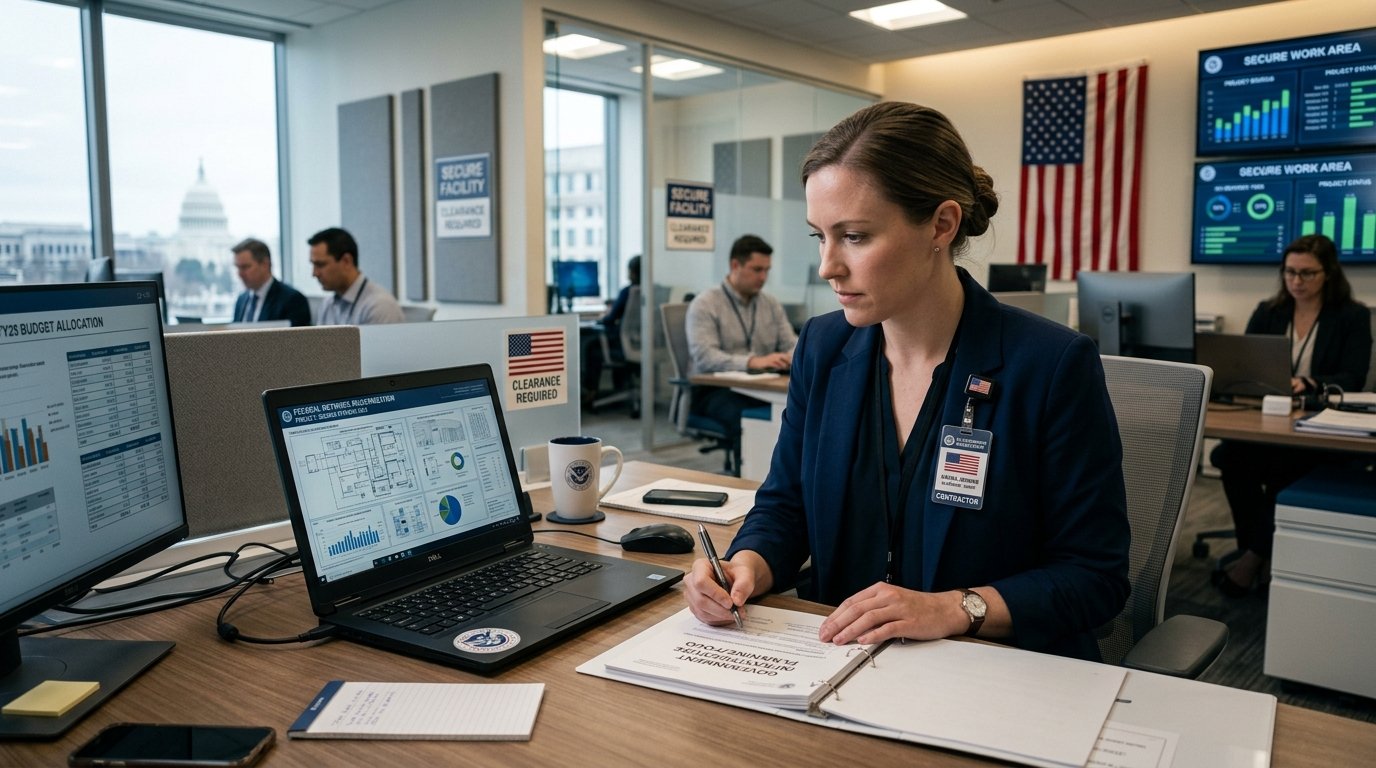
Government Contract Jobs USA 2026 – Your Complete Guide to Finding and Landing Federal Contract Work
Government contract jobs in the USA are some of the most stable, well-paying positions available in today’s job market. Whether you are an IT professional, a defense specialist, a project manager, or an administrative expert, federal contracting work can provide you with long-term career security and above-average salaries. In 2026, the U.S. government continues to spend billions of dollars on contractors — and the opportunities for qualified workers have never been better.
This guide will walk you through everything you need to know about government contract jobs: how federal contracting works, which agencies are hiring, how much you can earn, and the step-by-step process to get hired.
What Are Government Contract Jobs?
A government contract job is a position where a private company or individual is hired by a federal, state, or local government agency to perform a specific service or deliver a product. Instead of being a direct government employee, you work for a private company that has won a government contract.
For example, a company like Lockheed Martin, Booz Allen Hamilton, or SAIC might win a $50 million contract with the Department of Defense. They then hire engineers, analysts, and IT specialists to work on that contract. As a contractor employee, you are paid by the private company — but your work serves the government.
Government contracting is a massive industry. The U.S. federal government awards over $700 billion in contracts annually, making it one of the largest employers in the world by indirect hiring.
Types of Government Contract Jobs in the USA
The range of positions available in government contracting is enormous. Here are some of the most common categories:
Information Technology (IT) and Cybersecurity
- Software developers and engineers
- Cybersecurity analysts and engineers
- Cloud architects and DevSecOps specialists
- Data scientists and analysts
- IT project managers
Defense and Intelligence
- Intelligence analysts
- Defense systems engineers
- Logistics and supply chain managers
- Program and project managers
Healthcare and Science
- Government-contracted nurses and physicians (VA hospitals)
- Public health analysts
- Research scientists and lab technicians
Administrative and Professional Services
- Contract administrators
- Human resources specialists
- Budget analysts and financial managers
- Technical writers and editors
Construction and Engineering
- Civil and structural engineers
- Construction project managers
- Environmental engineers
Government Contract Jobs Salary Range in 2026
One of the biggest advantages of government contracting is the competitive pay. Because private companies need to attract top talent to fulfill government contracts, they often pay more than comparable private-sector roles.
- Entry-level contractor positions: $45,000 – $65,000 per year
- Mid-level IT or analyst roles: $75,000 – $110,000 per year
- Senior engineers or project managers: $110,000 – $150,000 per year
- Cleared professionals (Secret/Top Secret clearance): $120,000 – $200,000+ per year
- Senior cybersecurity professionals: $140,000 – $180,000 per year
Having an active security clearance is one of the most valuable credentials you can have in government contracting. It can add $20,000–$50,000 or more to your annual salary depending on the clearance level and the agency you support.
Top Government Contracting Companies Hiring in 2026
If you want to break into government contracting, these are the companies to watch. They hold billions in federal contracts and are always hiring:
- Lockheed Martin – Defense and aerospace leader
- Booz Allen Hamilton – Consulting, IT, and analytics for federal agencies
- Leidos – Defense, intelligence, and health IT
- SAIC (Science Applications International Corporation) – Technology and engineering services
- Raytheon Technologies – Defense systems and electronics
- General Dynamics – IT solutions and defense
- CACI International – IT, intelligence, and defense
- ManTech International – Cybersecurity and IT services
Beyond these giants, thousands of small and mid-size businesses also hold government contracts, especially through the Small Business Administration’s (SBA) set-aside programs. Do not overlook smaller contractors — they often offer great opportunities for career growth.
Do You Need a Security Clearance?
Many government contract jobs — especially in defense, intelligence, and law enforcement agencies — require a security clearance. Here is a quick overview:
- Confidential clearance: Basic level, required for many DoD positions
- Secret clearance: Common requirement, involves background investigation
- Top Secret (TS): Required for sensitive intelligence work
- TS/SCI (Sensitive Compartmented Information): Highest standard, most sought-after and highest-paying
If you do not already have a clearance, many contractors will sponsor you to get one — as long as you pass the background investigation. U.S. citizenship is required for most clearance levels.
How to Find Government Contract Jobs
Here are the best resources for finding federal contracting job openings:
- USAJobs.gov – Official federal jobs portal, including some direct contractor postings
- ClearanceJobs.com – Best site for security-cleared positions
- LinkedIn – Many contractors post openings and recruit directly here
- Indeed.com – Filter by “government contractor” or specific agencies
- Sam.gov – Search active federal contracts to identify who holds work in your area
- Company career pages – Check Booz Allen, Leidos, SAIC, and others directly
Step-by-Step: How to Apply for Government Contract Jobs
- Identify your skills and target agencies – Match your background to the type of work a specific agency does (DoD, VA, DHS, NASA, etc.).
- Research which companies hold contracts – Use SAM.gov to see active contracts in your field and location.
- Tailor your resume for federal contracting – Use keywords from the job description. Include clearance level if applicable.
- Apply through company portals or job boards – Many positions are filled before they are publicly posted, so networking matters.
- Prepare for security clearance investigation – Be honest about your history. Any gaps or inconsistencies can delay or deny clearance.
- Ace the interview – Interviewers often focus on problem-solving, team collaboration, and knowledge of government regulations (like FAR — Federal Acquisition Regulations).
Tips to Stand Out as a Government Contractor Applicant
- Earn a PMP (Project Management Professional) certification — it is highly valued in contracting
- Learn the Federal Acquisition Regulations (FAR) basics if you want to move into contract management
- Network at industry events like AFCEA, GovCon, and agency-specific job fairs
- If you are a veteran, highlight your service — many contracts have veteran hiring preferences
- Consider getting a DAWIA (Defense Acquisition Workforce Improvement Act) certification if pursuing DoD contracting roles
Frequently Asked Questions (FAQs)
What is the difference between a federal employee and a government contractor?
A federal employee works directly for the U.S. government and receives government benefits like a pension and civil service protections. A government contractor works for a private company that has a contract with the government. Contractors often earn higher salaries, but their positions can end when the contract expires or is not renewed.
Do I need to be a U.S. citizen to work on government contracts?
It depends on the position. Some contracts allow permanent residents (green card holders) to work on them. However, positions requiring any level of security clearance typically require U.S. citizenship. Always check the specific citizenship requirements in the job posting.
How long do government contracts last?
Most government contracts run for a base period of one year with option years (usually up to 5 years total). Positions tied to longer-term programs can provide several years of stable employment. Contractors with strong performance reviews are often retained when contracts are renewed.
Are government contractor benefits as good as direct federal employment?
Benefits vary by company. Large contractors like Booz Allen and Leidos offer excellent health insurance, 401(k) matching, tuition assistance, and paid leave. In many cases, contractor salaries more than compensate for any differences in retirement benefits compared to civil service positions.
Can small businesses compete for government contracts?
Absolutely. The federal government sets aside a certain percentage of contracts specifically for small businesses, veteran-owned businesses, women-owned businesses, and businesses in underserved areas. Registering on SAM.gov and obtaining relevant certifications opens those set-aside opportunities.
Conclusion
Government contract jobs in the USA remain one of the most stable and well-compensated career paths you can pursue in 2026. From IT and cybersecurity to healthcare and construction, the opportunities span virtually every industry. With the federal government continuing to spend heavily on contractors, now is an excellent time to position yourself for this market.
Build your resume, explore your clearance eligibility, research the right contracting companies, and start applying strategically. Whether you are a fresh graduate or a seasoned professional looking for your next move, government contracting could be the career milestone that changes everything. Your federal contracting career is waiting — take the first step today.
About the Author